
Do you supply armed security guards?
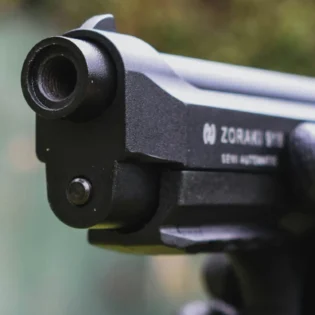
This is a simple question we get asked regularly. Unfortunately, it’s not such an easy question to answer. Yes, we do supply armed security guards, but not everywhere or all the time. Stick around for a while, and all will become clear as we explain the somewhat complicated subject of armed security guarding in the UK and Europe.
Titan Security Europe delivers security and protection services across the UK and Europe. By its nature, security guarding can put personnel in confrontational situations. One guiding principle that we tend to adhere to is that the question of arming security guards is one of risk rather than demand.
No serious security plan begins with “give them guns”. We work with our clients to assess the level of threat first and then look for a proportionate yet effective response to it.
In this blog post, we are covering:
What is armed security guarding?
Are you considering an armed security guard option? Armed security guarding involves the supply of firearms and less lethal weapons to aid and protect security officers when carrying out roles that have the potential for extreme danger.
Many people assume that armed guarding is simply a security guard authorised to carry a gun. Whilst true to an extent, there are many alternative ways of arming a security guard. Sometimes referred to as non-lethal, we prefer the more accurate term “less lethal”
Less lethal arms
Arms that fall under the category of less lethal include:
- Extendable Batons: Extendable batons are telescopic metal sticks or tubes that collapse for easy carrying and extend with a flick or snap of the wrist.
- Pepper Spray: Pepper spray is a pressurised canister that dispenses a burning irritant, typically a chilli pepper-based solution. This would be aimed at the face to incapacitate a target temporarily.
- Tactical Torches: These are powerful LED flashlights that, in addition to lighting up dark areas, can be used to dazzle and blind suspects temporarily
- Tasers: These fire wired darts that embed in the skin’s surface and deliver an electric shock that disrupts muscles and temporarily disorients or incapacitates a target.
- Handcuffs: Although not strictly a weapon, handcuffs used to restrain a target deserve a place in the list of potential arms that a security guard might carry

Less lethal arms like this taser could be issued to security guards in some countries
Do you supply armed security guards in the UK?
The short answer to this question is no. Unlike some European jurisdictions, where security guards performing specific private-security roles may lawfully carry firearms or less‑lethal weapons under licence, the UK is one of the few places in the world where even the police do not carry firearms as standard.
The chances of UK-registered security guards or close protection officers being permitted to carry a firearm are virtually zero. The Security Industry Association (SIA) is the body responsible for licensing and regulating the security industry. While the SIA sets competence, conduct and training standards for private security staff, any question of weapons is governed by UK criminal and firearms law.
There is no SIA firearms training module and no SIA pathway that allows a private contractor to carry guns as part of standard SIA‑regulated work. So commercial SIA‑licensed operatives are expected to work unarmed, while specialist police units handle armed protection.
What is less-lethal arming for UK security guards?
In the UK, the use of most less-lethal weapons is also forbidden. From the list above, there are 2 items that ordinary citizens are allowed to carry in the UK and are therefore legal for security guards to carry:
1. Handcuffs
The SIA’s own guidance confirms it “neither endorses nor declines to endorse” handcuff use and that there is no separate “handcuff licence”; instead, it expects employers to ensure staff are properly trained and that force is lawful and proportionate.
The use of handcuffs has the potential to be problematic and cause injury unless security guards have received thorough training in their use. There are dedicated handcuff courses and “mechanical restraint” or “advanced control” programmes for SIA-licensed door supervisors, security guards, close protection officers, and enforcement officers who may need to use handcuffs in their roles.
2. Tactical Torches
Powerful torches are standard-issue equipment for security guards. They help them see faces, hands and objects more clearly before they decide what to do. They reduce the risk of mistaken identity and prevent overreaction. They can also help in emergencies, illuminating an exit route in darkness.
Briefly shining a light toward a person’s upper chest, or just below eye level, can disorient them and discourage an aggressive approach without requiring physical contact. This gives guards the extra time needed to de-escalate a situation and prevent injury to all parties involved.
if a security guard is in danger, a proportionate and limited defensive use of tactical torches is acceptable. A powerful beam directed near the eyes can momentarily dazzle and disorient someone, buying time to create distance, issue verbal commands, or withdraw without needing physical force.
Do you supply armed security guards in Europe?
This is where things become complicated. The answer is yes, we do provide armed guards in Europe, but not everywhere and not all of the time.
In EU member states, there is no overarching regulation governing “armed guard” law. Instead, it’s a veritable patchwork of laws. The EU has a set of firearms rules that establish a baseline. It is then left to each member country to decide the level of arms that private security can carry. Some countries allow batons and sprays but not firearms, and others allow firearms but limit them to clearly defined roles, mandatory training and licensing.
What we do for our European operations is to help clients determine what is operationally appropriate for their project risk profile and location. Our operations team has vast experience and a wealth of knowledge to draw on from armed guarding projects across Europe. When the answer is not immediately apparent, they know where to find it.
Country-by-Country Summary of Permitted Armed Security in Key European Countries
The following table lists key European countries and indicates what may be issued to private security personnel and under what circumstances. This table is based on available information. The sector changes constantly, so this information should be checked and confirmed with the relevant country. When required to cover international borders, additional checks will be required.
| Country | Firearms for private security? | Less‑lethal tools permitted? | Notes |
|---|---|---|---|
| United Kingdom | Generally, no (armed protection handled by police). | Handcuffs and tactical torches are not prohibited to the public and therefore are allowable, dependent on specific training for security guards | UK firearms law treats OC, CS and Tasers as prohibited firearms; SIA does not license weapons; any handcuff use relies on general lawful force tests. |
| France | Yes, for specific roles (e.g. cash‑in‑transit, certain high‑risk close protection scenarios) with authorisation | Yes, tightly regulated: batons and sprays are classified as weapons; CEWs are mainly for law enforcement | Weapons are classed in categories; private security armament requires specific authorisation and strict conditions. |
| Spain | Yes, in defined services (e.g. transport of high-value goods, static security at certain critical sites) under licence | Yes, regulated: batons and some sprays allowed under conditions; CEWs largely reserved to police | Spain is often cited as having a mature, strict framework for armed private security; roles, training and equipment are closely prescribed. |
| Germany | Yes, in narrow contexts (e.g. special transport, high‑risk contracts) under licence | Yes, limited and regulated: batons; OC “animal repellent” in civilian law, but professional use governed separately; CEWs mostly restricted | Federal weapons law and Länder practice make armed/private less‑lethal carriage conservative; most guarding is unarmed. |
| Czech Republic | Yes, relatively broad: batons and sprays widely used; CEWs available under weapon rules | Yes, relatively broad: batons and sprays widely used; CEWs available under weapon rules | Czech law is comparatively liberal regarding civilian and professional weapon possession but still licence‑based. |
| Belgium | Yes, in very limited, highly controlled roles | Yes, but narrow: sprays and similar devices are mostly restricted to authorised professionals; CEWs for police | Belgium is frequently thought of as one of the strictest states on private security armament. |
| Portugal | Yes – armed private security is possible in certain services with state authorisation and licensing. | Yes – specified less‑lethal tools can be used by licensed guards where authorised (batons/sprays), with CEWs more tightly controlled. | Further liaison with the police and relevant authorities is recommended in Portugal |
| Italy | Yes – armed private security is permitted for defined services (e.g. valuables transport, some high‑risk guarding) with strict state authorisation, firearms licences and training. | Yes – specified less‑lethal tools (such as approved batons and some chemical agents) may be used by licensed guards where authorised; CEWs are more restricted and mainly associated with law enforcement. | Lengthy advanced notice would be required to obtain the correct permissions for armed guarding |
| Definitions Used in this Table | CEW stands for Conducted Energy Weapon. These are devices like Tasers that fire wired darts to deliver an electric shock, disrupting muscle control and temporarily incapacitating a target. They are classified as less-lethal tools in law enforcement contexts. | OC stands for Oleoresin Capsicum, the active irritant in pepper spray. It causes intense burning in the eyes, skin and lungs, leading to temporary blindness, coughing and disorientation for compliance without lasting harm. | Further reading. The Small Arms Survey |
Armed Security in South Eastern Europe
Southeastern European countries are more permissive of armed security guards. While regulations on armed private security are generally strict, differences lie in the responsibility for registering weapons and ensuring their traceability. In some cases, responsibility lies with the security contractor and in others, the individual.
These SEE countries, which are also members of the Council of Europe, permit guards to be armed under specific conditions.
| Country | Status of Armed Security | Common Usage |
| Albania | Allowed | Banks, money transport, and diplomatic sites. |
| Bosnia & Herz. | Allowed | A high percentage (~40%) of the industry is authorised to be armed. |
| Bulgaria | Allowed | A high percentage (~40%) of the industry is authorised to be armed. |
| Croatia | Allowed | Common for Cash-in-Transit (CIT) and high-value asset protection. |
| Greece | Allowed | Permitted for specialised protection and CIT services. |
| Moldova | Allowed | Regulated by the Ministry of Interior for high-risk sites. |
| Montenegro | Allowed | About 25% of the security industry is authorised for firearms. |
| North Macedonia | Allowed | Guards must pass specific medical and psychological exams. |
| Romania | Allowed | Strictly regulated; primarily for Cash |In Transit and strategic premises or assets. |
| Serbia | Allowed | One of the most developed private security markets in the region. |
| Slovenia | Allowed | About 25% of the security industry is authorized for firearms. |
Important Caveats: This information reflects the situation at the time of the SEESAC / Saferworld research (mid‑2000s to mid‑2010s) and may have been modified by later firearms and private security laws in each country. Download the Seesac report. This remains the most reliable source of general guidance.
Restricted Weapon Types: In almost every SEE country, guards are limited to handguns (pistols/revolvers). Semi-automatic rifles or automatic weapons are strictly forbidden for private use, except in very rare cases in Türkey for critical energy infrastructure.
Specific Duties: Armed status is usually reserved for Cash-in-Transit (CIT), protecting banks, or guarding “critical infrastructure” (like power plants or government buildings).
Strict Licensing: In most cases, a guard must hold two separate licenses: a general security guard license and a specific firearms permit for work, which requires mental health checks and shooting range certification.
Uniform Requirements: Armed guards are almost always required to be in full uniform with visible ID badges; “plainclothes armed security” is usually reserved for state police or specialised close-protection details.
Advice for Clients Considering Armed Security in Europe
Armed or less-lethal security is possible across Europe, but it’s tightly regulated by country and role. No one-size-fits-all solution exists. These are our recommended steps to work with Titan Security Europe to get the effective security services you need.
Step 1: Making a realistic initial risk assessment
Start by sharing your site details, sector (retail, events, high-value goods transport, VIP protection), location and known threats like robbery statistics or a history of past incidents. We conduct a free initial risk review to match capabilities to need. Weapons only make sense if the threat justifies them legally and operationally.
Step 2: Understand Country-Specific Rules
Europe’s laws vary: UK SIA guards stay unarmed (firearms police-only), while Spain, Italy, Portugal and others allow licensed firearms for cash-in-transit or high-risk sites. Less-lethal tools (batons, OC/pepper spray, CEWs/Tasers, handcuffs) are often permitted with training, but sprays and Tasers are banned in places like the UK. Ask us for a jurisdiction check – we map firearms (yes/no for private security) and less-lethal options upfront.
Step 3: Choose the Most Appropriate Level of Security
- Unarmed baseline: Trained teams using de-escalation, torches for dazzle/control, CCTV and police liaison.
- Less-lethal add-on: Handcuff-trained guards or tactical tools where legal
- Armed specialist: Vetted, licensed and appropriately trained officers for permitted high-risk tasks, guided by strict operating procedures, weapons storage and issue regulations and comprehensive reporting.
Step 4: Request Our Armed Security Compliance Audit
Contact Titan Security Europe with your country and risks. After determining what is appropriate, we can inform you of the legal requirements, any additional training needed, notice requirements, costs, and KPIs for performance. Instead of baseless promises with the potential to unravel you get audited solutions that provide the levels of protection you need while we get to keep our licence.
These are the “first consideration” services we supply that would not need any extra permissions or licensing:
| Unarmed Layer | Benefit | Legal Across Europe? |
|---|---|---|
| Trained security guard presence | Deters 70% of incidents | Yes |
| Tactical torches | Non-contact control and self-defence | Yes (as tools not striking weapons) |
| Body cams/CCTV | Evidence & accountability | Yes |
| Handcuffs | Restraint & protection | Yes (with training caveat) |


Get a FREE Security Consultation and a Competitive Quote
We offer flexible and cost-effective security options tailored to your specific needs. Talk to our security experts today
